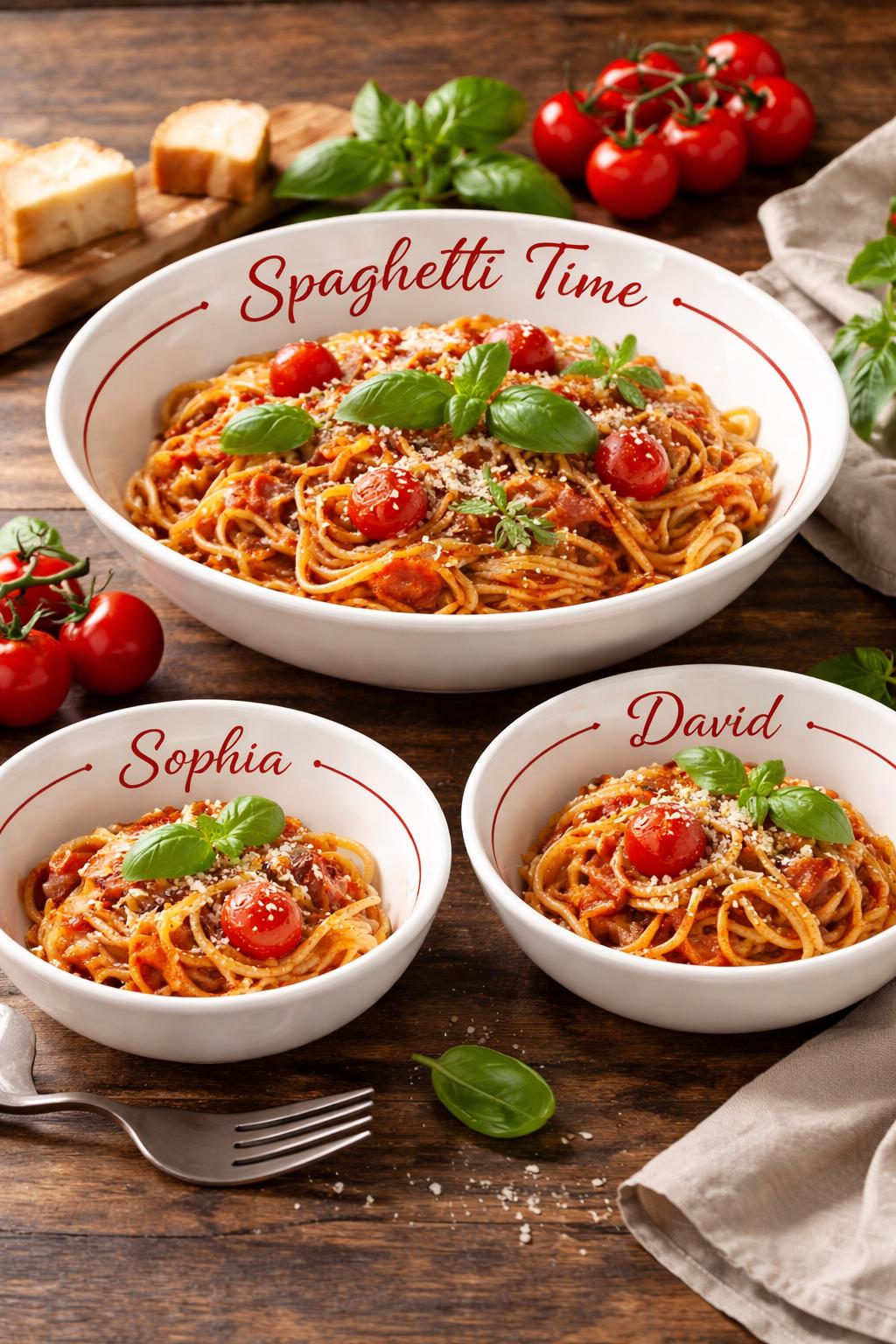
The Bowl at the Center of the Table
There are objects that belong to the kitchen. And there are objects that belong to the table. A bowl for spaghetti belongs to the table. Not because of its shape. But because of what happens around it.
The Italian table begins with sharing
In many homes across Italy, pasta is not simply a dish. It is a moment. It marks the time when everyone gathers, when conversations begin again, when the day slows down just enough to become visible. The bowl placed at the center of the table is never only functional. It is an invitation.
A bowl is not just for serving
Large plates and bowls designed for pasta have always had a particular role in Italian homes. They create space. Space for movement. Space for gesture. Space for sharing. A spaghetti bowl does not isolate a meal. It gathers it. And sometimes, it gathers people as well.
Everyday rituals create memory
Not every ritual is ceremonial. Some rituals are simply repeated. Sunday lunch. A familiar recipe. A table that looks the same every week. Over time, these gestures become part of how families remember themselves. The objects that remain present in those moments quietly become part of the story.
The table as a place that stays
There is a reason why certain plates are kept longer than others. Because they were there. They were present when people met, spoke, celebrated and stayed together. Italian tableware has never been only decorative. It has always been relational. Designed to stay in use. Designed to stay visible. Designed to stay part of everyday life.
A bowl at the center of the table
Some objects do not need to be explained. They only need to remain. A spaghetti bowl is one of them. It stays where people meet. And where stories continue.